How does a GPS dog fence work?
A collar that knows where it is and where your line is: how a GPS dog fence works, and where it falls short.
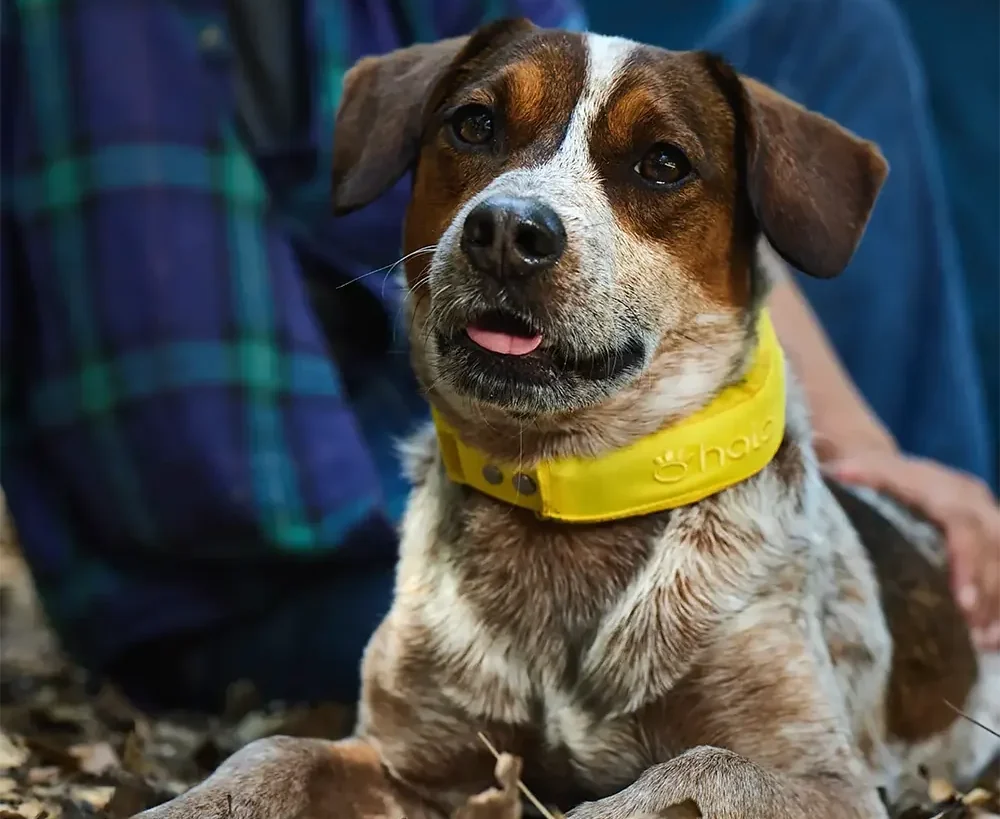
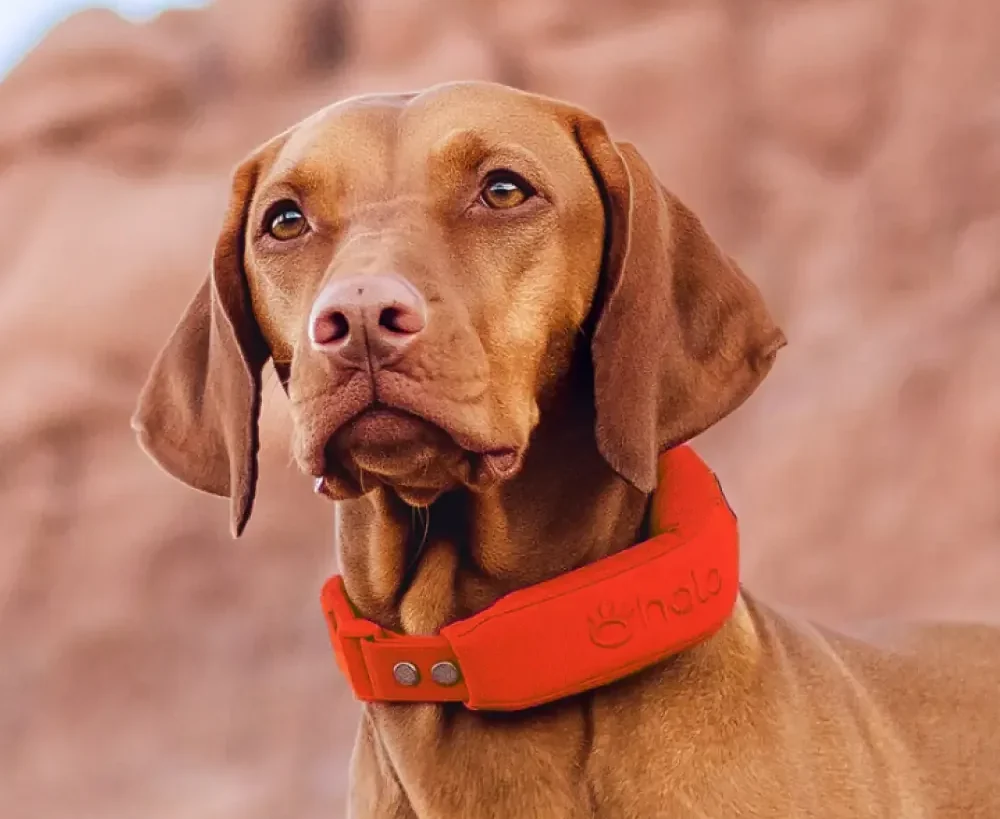
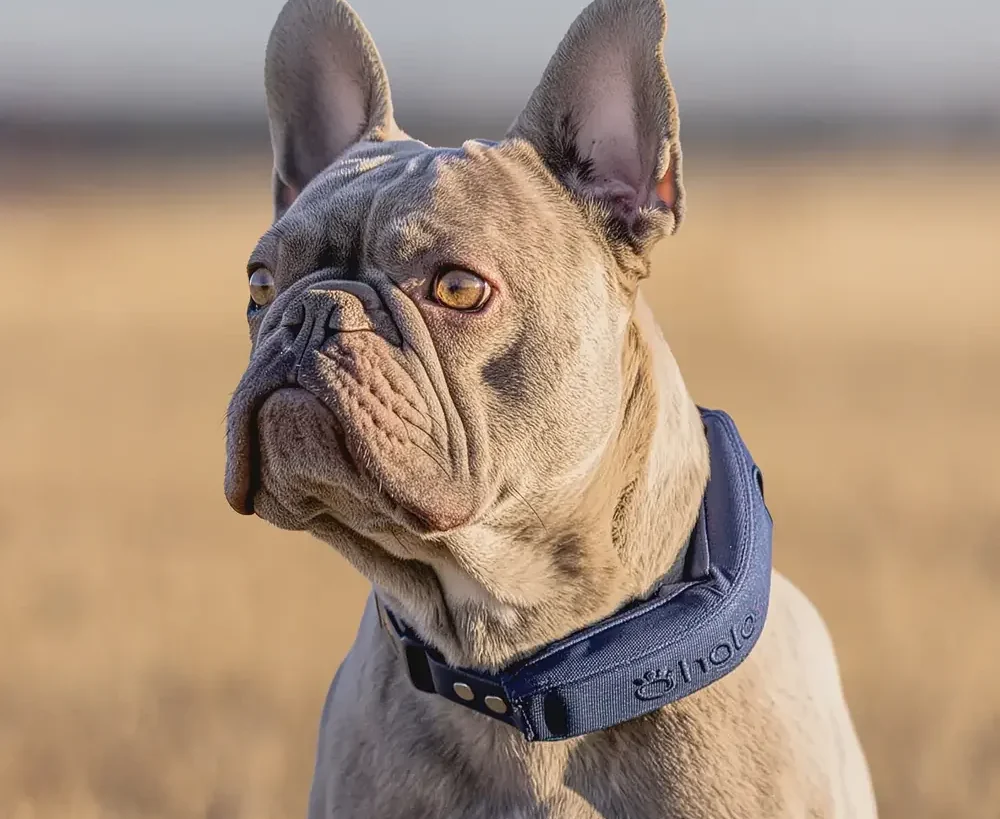
Halo Collar 49.2/10Read the review
A GPS dog fence is a collar with a satellite receiver and a small computer. You draw a boundary in an app or walk it with the collar, the collar stores it, and from then on it compares its own position with that line many times a second. When your dog gets close, it plays a warning tone; if the dog keeps going, it adds vibration and, only on collars where you turn it on, static. No wire is buried and no transmitter sits in the house.
From satellites to a boundary
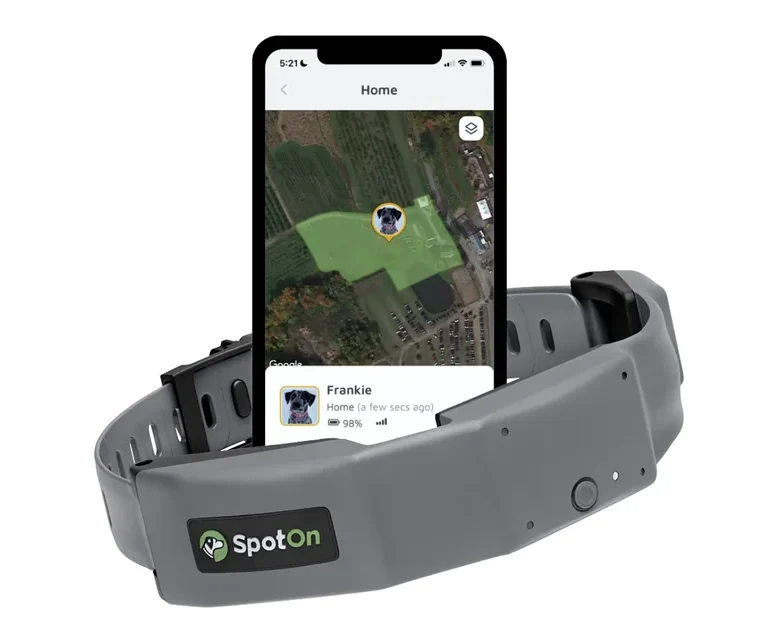
A GPS receiver works out where it is by timing signals from several satellites. On a phone, a few yards of error does not matter. On a dog fence it does, so brands add tricks. Dual-frequency receivers (Halo, SpotOn, PetSafe Guardian GPS 2.0) listen on two bands to filter out signals that bounced off a roof or a tree. Halo adds a correction service it calls Precision+ on the Collar 5. SpotOn puts its effort in the antenna: a dual-band, dual-feed active antenna on the Nova.
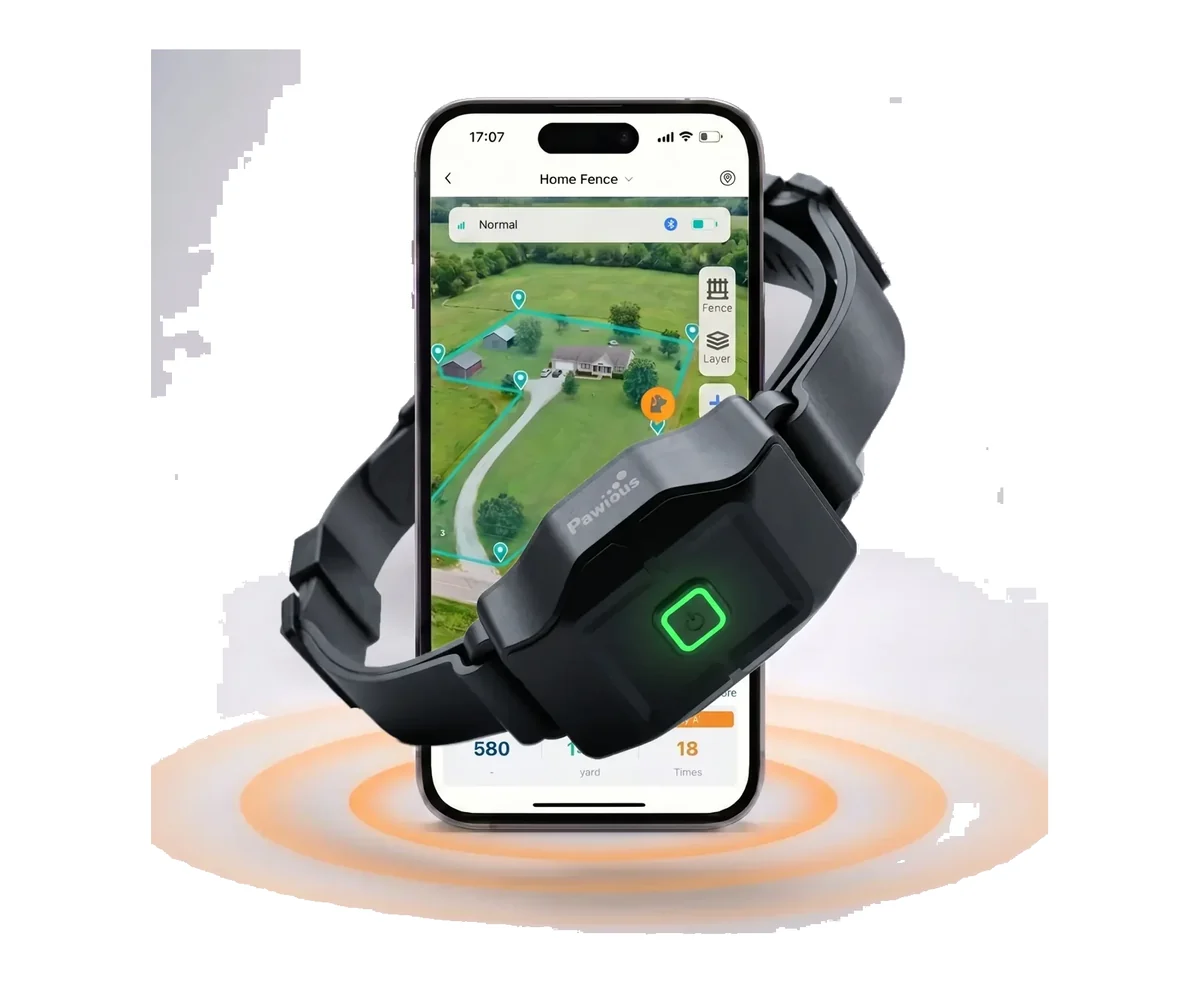
You then define the fence. On Halo, SpotOn, PetSafe Guardian and Invisible Fence you draw it on a map in the app or walk it. On the PetSafe Customizable you walk the yard and drop 4 to 8 posts from the collar itself. PawTronic and Pawious allow a circle or a polygon of up to 8 points.
- Charge the collar and set it up in the app (or on the collar, for the PetSafe Customizable).
- Draw or walk the boundary, keeping it away from the road and the house walls.
- Place training flags where the warning starts, so you and your dog can see it.
- Train in short sessions on the warning tone first, with treats inside the line.
- Let the collar work on its own once your dog turns back at the tone.
What makes the boundary drift
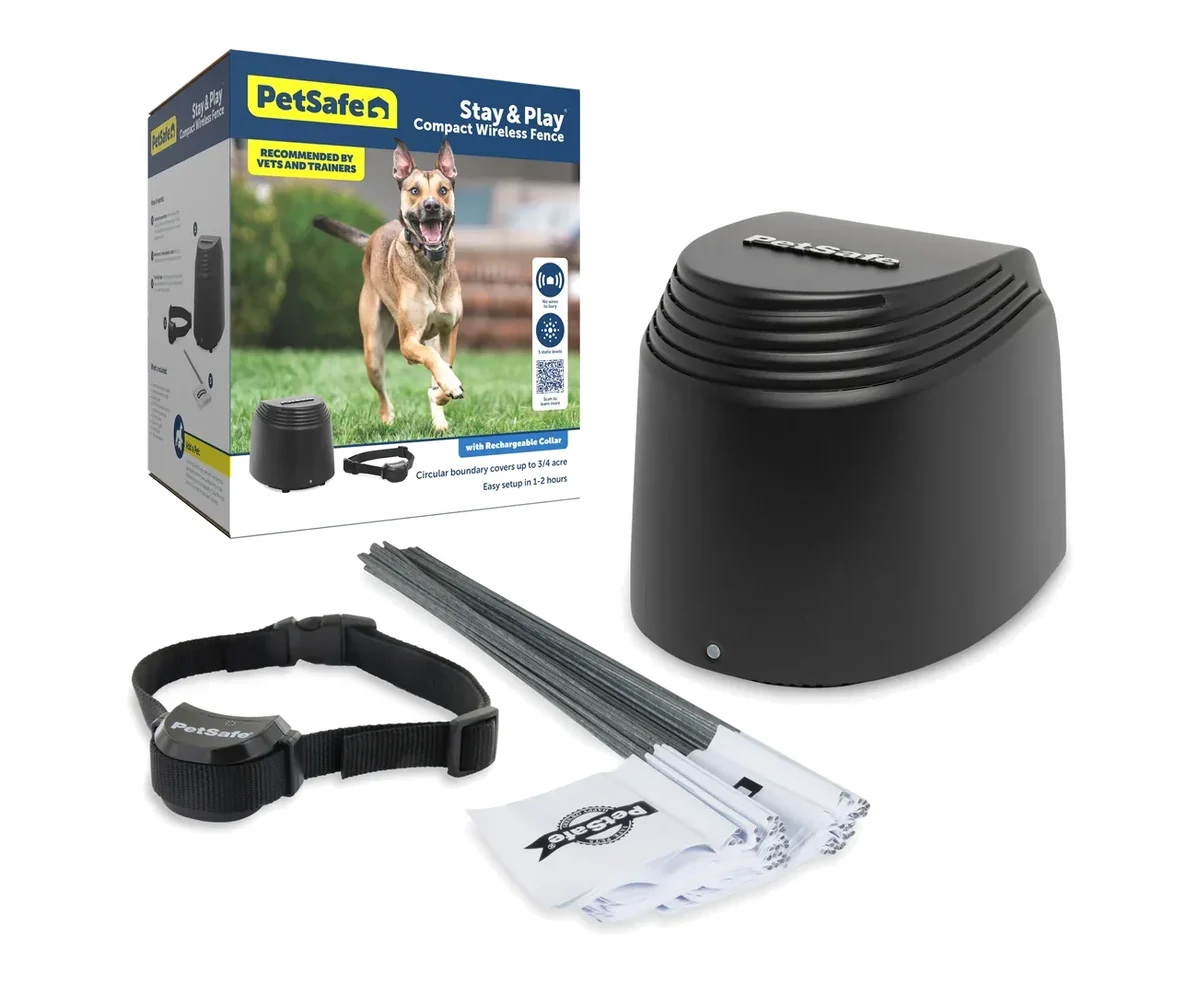
Every brand we compare warns about the same things: dense tree cover, tall buildings and a low horizon. PetSafe and Invisible Fence ask for yards "without dense tree cover". SpotOn says lower-grade antennas let in signals affected by trees, buildings or the horizon and "cause more GPS drift". If your house is under big oaks, a GPS fence is the wrong tool, whatever the brand; look at a radio fence such as the PetSafe Stay & Play or a buried wire.
Accuracy figures exist, but they are brand claims measured in the brand's own way: Halo says Precision+ held within 2 feet in a named test, SpotOn states under 5 feet for the Nova and about 6 feet for the Omni. We quote them; we do not score them.
How big your yard needs to be
| Device | Smallest yard stated by the brand |
|---|---|
| Halo Collar 4 and Collar 5 | 900 sq ft (30 x 30 ft) |
| PetSafe Stay & Play (radio, not GPS) | Circle from 22 ft radius |
| SpotOn Nova | 1/3 acre, 80 ft at the narrowest point |
| SpotOn Omni, PetSafe Guardian GPS 2.0, Invisible Fence GPS Flex, PawTronic polygons | 1/2 acre |
| PetSafe Customizable GPS, Pawious XEdge | 3/4 acre |
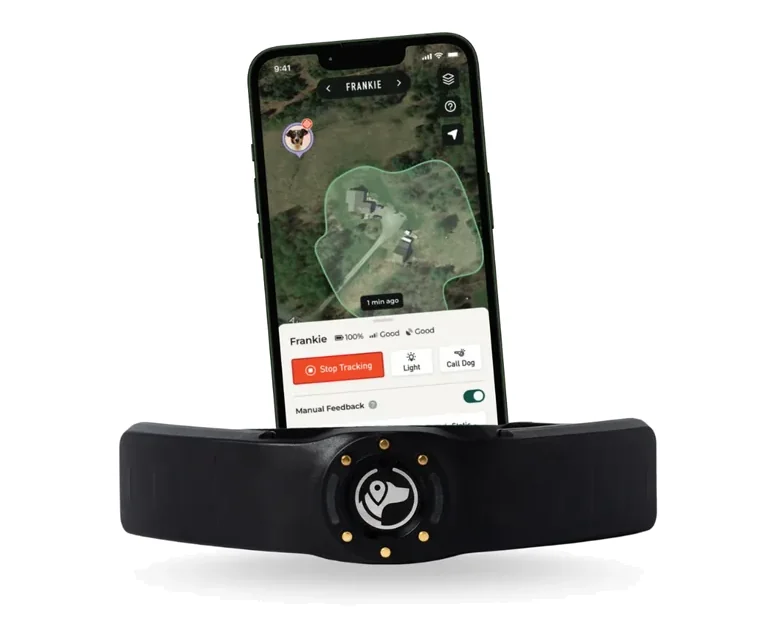
SpotOn GPS Fence Nova Edition8.8/10Read the review
What the collar does near the line
Every fence collar here works in steps. First a warning, usually a tone, as your dog walks into the zone just inside the line. Then, if it keeps going, a stronger cue at the boundary itself. What that stronger cue is depends on the brand and on your settings:
| Device | Cues the brand describes |
|---|---|
| Halo Collar 4 and 5 | Sound (including Cesar Millan voice cues), vibration, optional static; static never required |
| SpotOn Nova and Omni | Two warning tones, then vibration and optional static at the boundary |
| PetSafe Guardian GPS 2.0 | Tone, vibration and 10 levels of static |
| PawTronic Pro Series 2 | Sound, vibration, sound + vibration, or sound + vibration + static |
| Pawious XEdge | Any mix of sound, vibration and static; stops after two cycles and falls back to sound only |
| PetSafe Stay & Play (radio) | Tone-only mode and 5 levels of static, no vibration |
The better collars also reward the right move. Halo plays one of three positive cues when your dog stops or turns back (a whistle, "Good Dog" or "Go Home"), and if the dog gets out, it switches to a Return Whistle that guides it home instead of escalating. PetSafe says a dog that leaves the Stay & Play area is not corrected when it comes back in. Check how your collar handles a dog coming home before the first session.
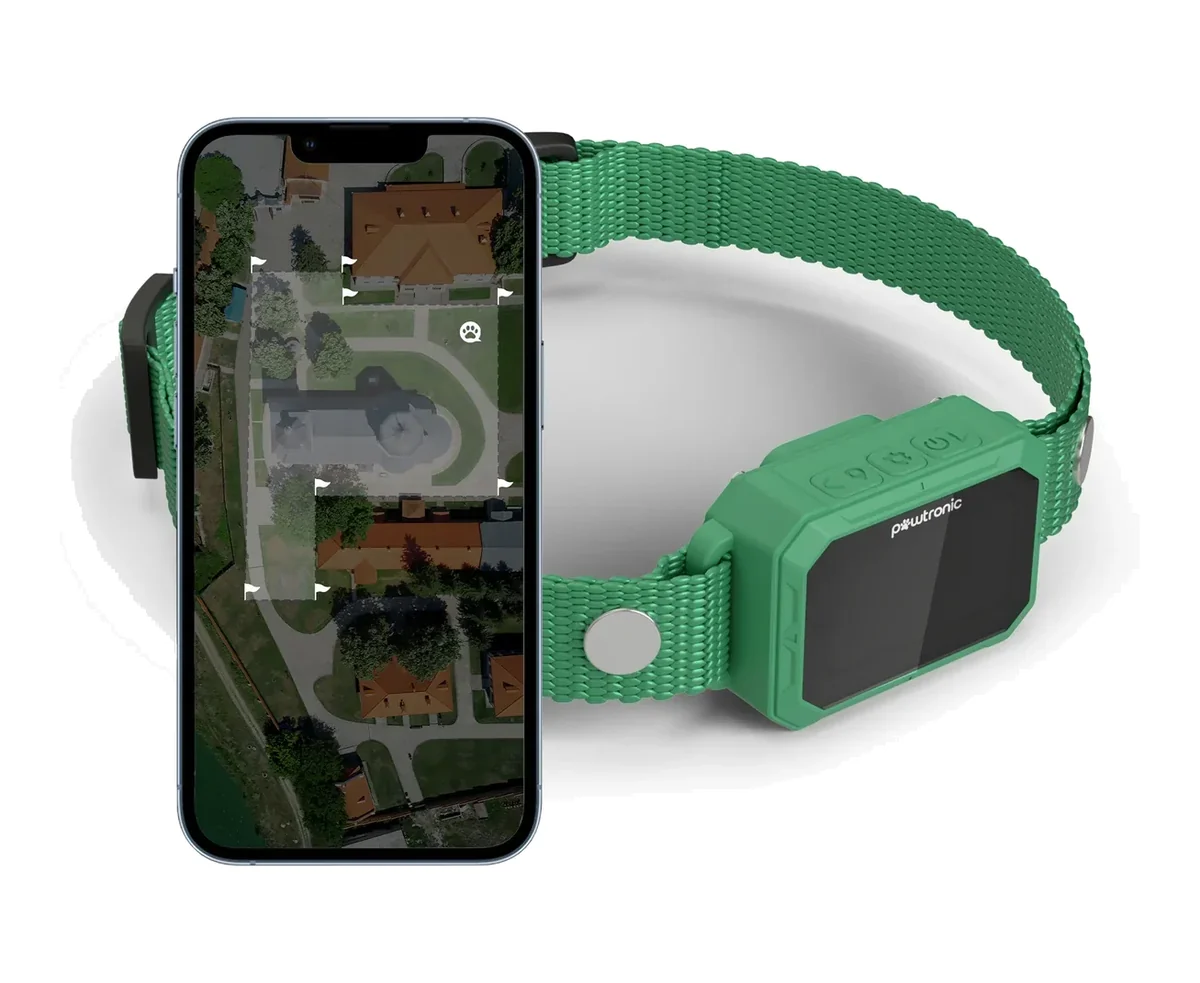 GPS dog fencePawTronic Pro Series 2
Battery: the habit that decides everything
A GPS fence only works while the collar is charged. Brand figures run from about 18 hours (Pawious) and 24 hours (PetSafe Customizable) to 48 hours (Halo Collar 5), 70 hours (PetSafe Guardian GPS 2.0) and 80 hours (Invisible Fence GPS Flex). Those are maximums; live tracking and cold weather use more. Pick a charging time that fits your routine, such as while your dog sleeps indoors, and stick to it.
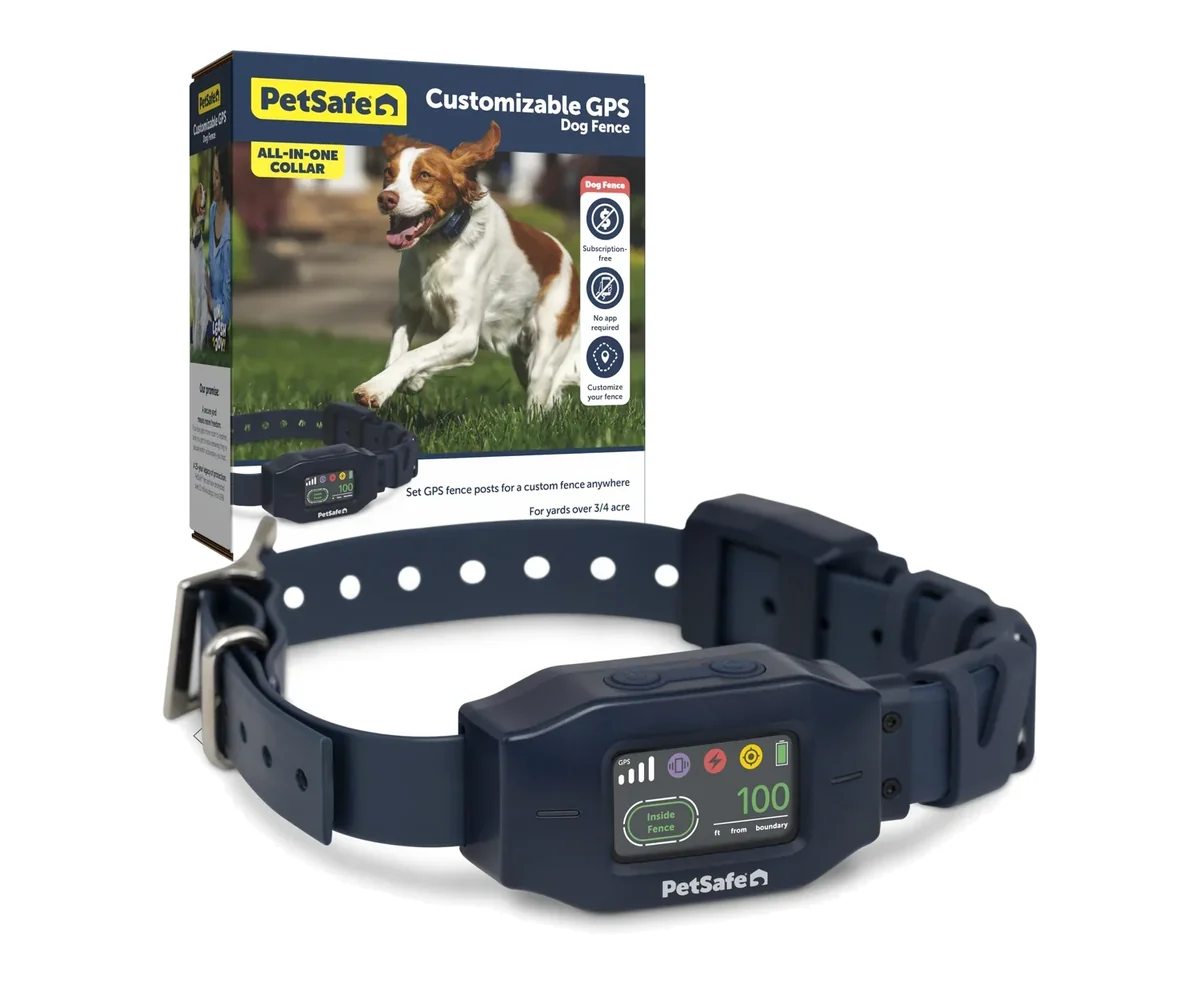 GPS dog fencePetSafe Customizable GPS Dog Fence
Figures from official manufacturer pages and US prices checked on November 9, 2026. Images: manufacturers. How we score: see our methodology.
Our selection
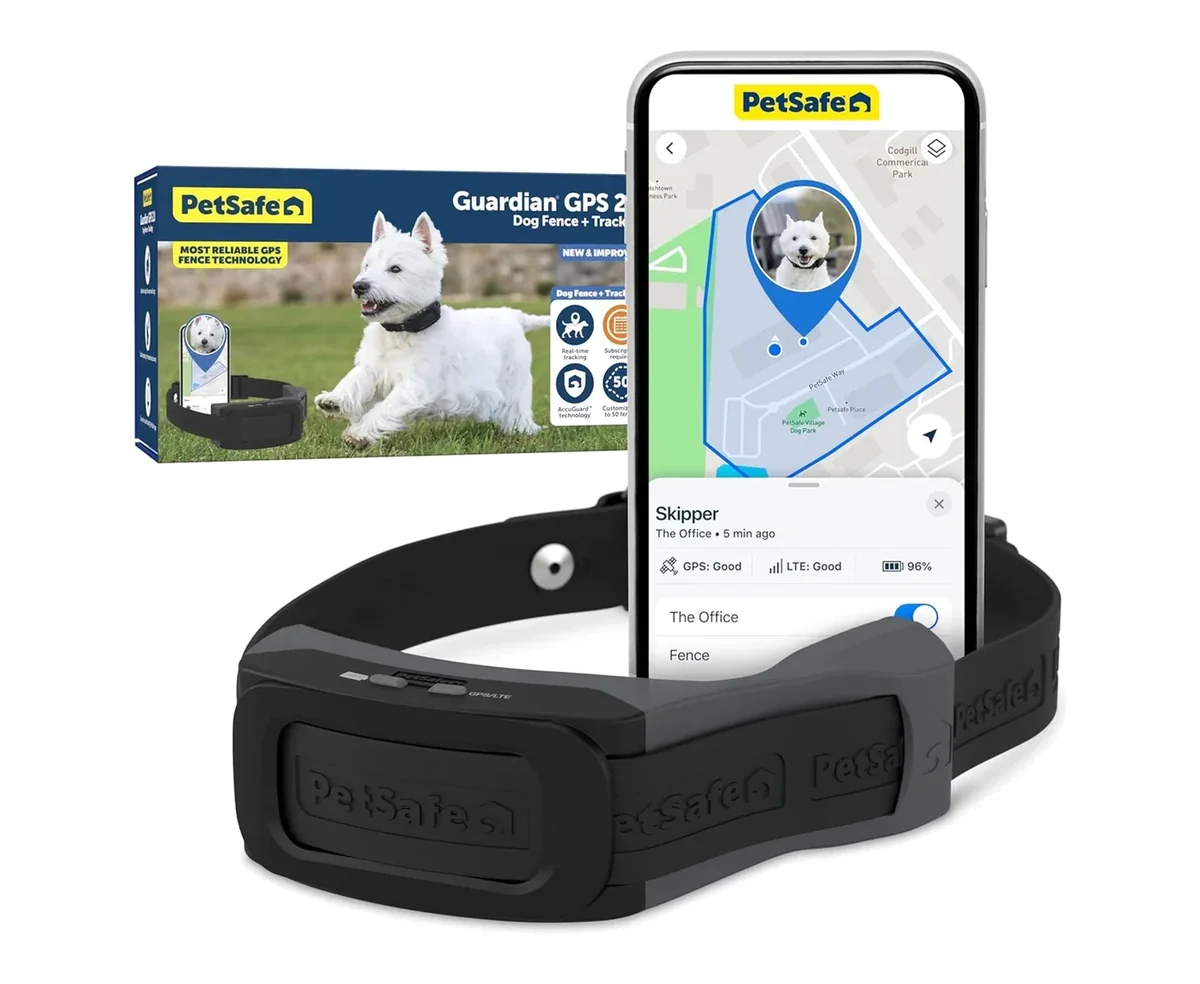
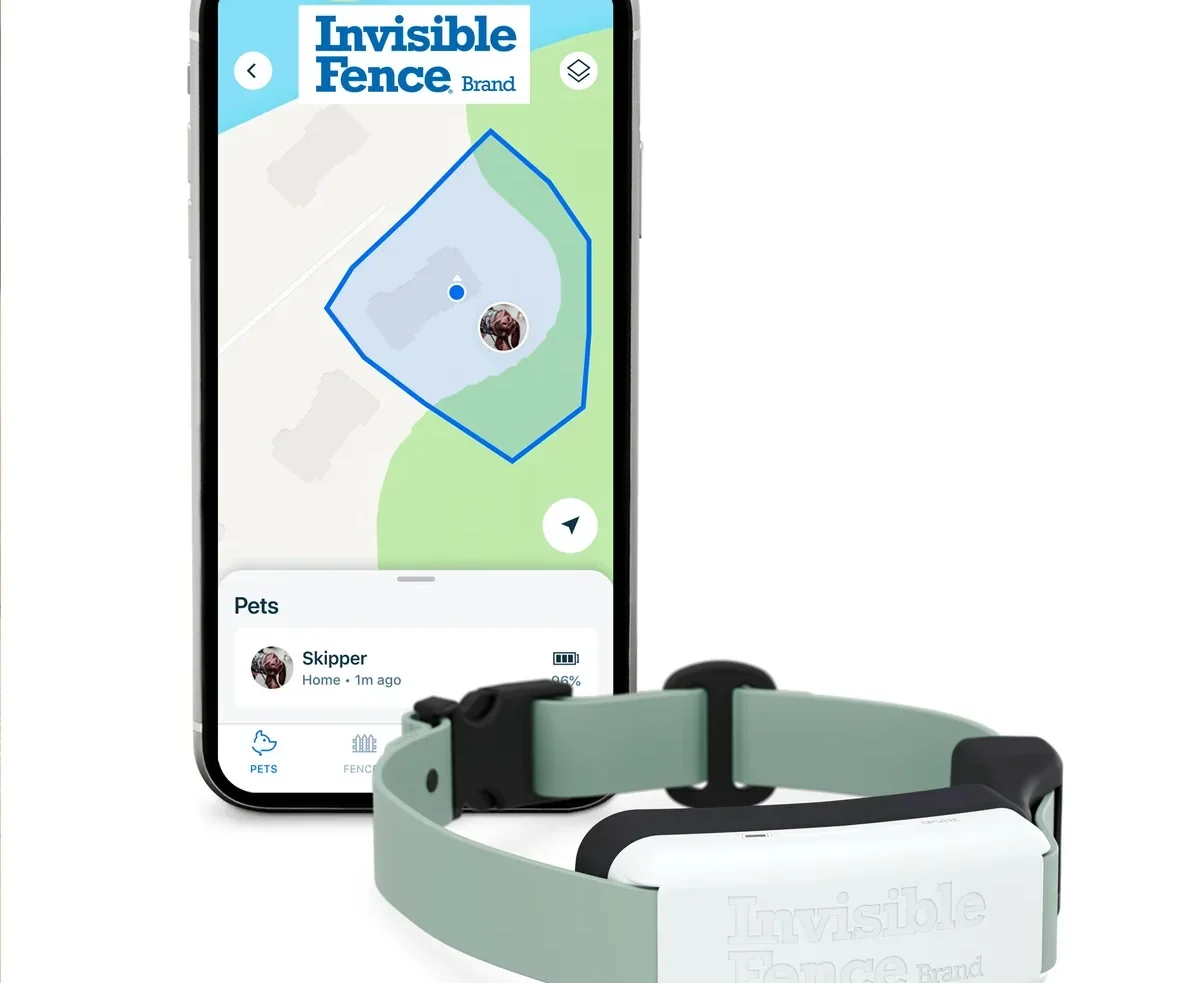
Three rated collars mentioned in this guide, with their 3-year cost.
Frequently asked questions
Do GPS dog fences need Wi-Fi?
Usually only for setup. Halo, SpotOn, PawTronic, Pawious and the PetSafe Customizable keep the fence on the collar. PetSafe says its subscription GPS fences (Guardian GPS 2.0) need cellular service to work.
How accurate are GPS dog fences?
Brands claim between about 2 and 6 feet in good conditions (Halo, SpotOn). Under trees or near tall buildings, expect worse. We do not score these claims because brands measure them differently.
Do GPS dog fences work on small dogs?
Some do: Halo and the PetSafe Guardian GPS 2.0 are rated from 10 lb, PawTronic from 7.9 lb. See the ranking for small dogs.
How long does a GPS dog fence battery last?
From about 18 hours (Pawious XEdge) to 80 hours (Invisible Fence GPS Flex) in the brands' own figures. Most owners end up charging every night or every other night.